Charizard Resin Statue
Since getting my 3D printer, my work has been moving toward the realm of tangible items. I have recently created a pipeline for creating resin statues starting from a digital sculpture in Blender and ending with airbrushing a clear coat on the final, physical product.
This Charizard is the first large, multipart sculpture I've done to date. It took a relatively short time to model- about 10 hours or so. That is in stark contrast to how long it took to print on my Prusa i3 MK3. That in itself totaled over 120 hours for all seven pieces of this 11" statue.
Once all the pieces were printed, they were sanded and coated in a thin urethane coating to hide the print layers. Then, silicone molds were made for each and solid resin was used in the final product. When all the resin pieces were fully assembled, acrylic paint was applied using both bristle brushes and an airbrush.
If you'd like to see more, check out https://www.etsy.com/listing/727322721/pokemon-charizard-resin-statue
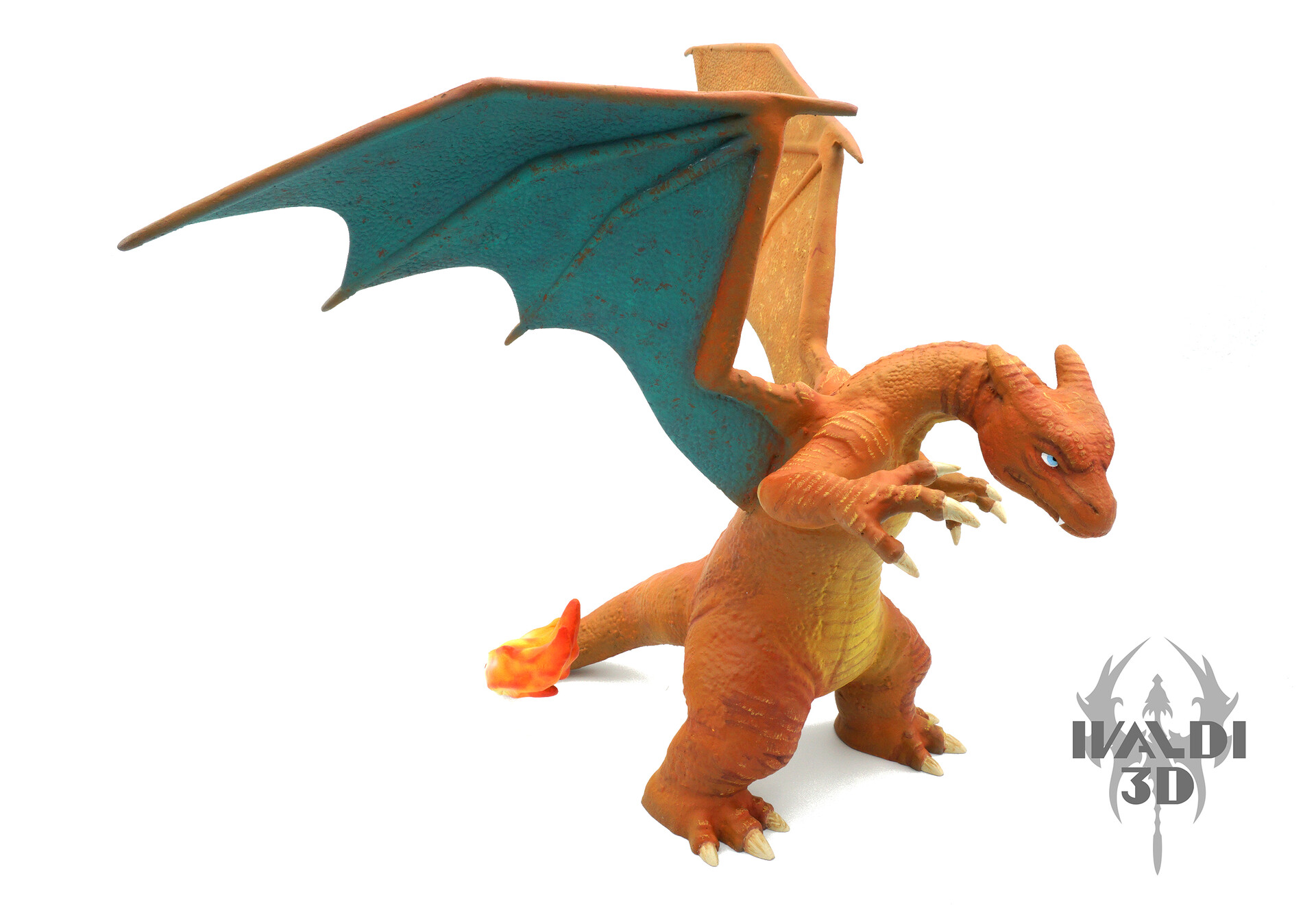
Resin Statue created from a 3D print of a Blender sculpt.

The sculpt. While I used several meshes during the building of this statue, all objects were unified into a single mesh for printing.

The statue was painted using a mix of a bristle brush and airbrush.

This Charizard was sculpted symmetrically using x mirroring and then later posed using a simple rig.

Seams and inconsistencies from the casting process were filled with a mix of ABS and Apoxie Sculpt.

Since it isn't time effective to modify weight painting, stretches and seams created while posing the model were sculpted over to maintain a natural look.

2 part epoxy was used to glue all seven pieces of this statue together.

Alphas were used during sculpting to add pebble-like textures and wrinkles into the skin.

To make slicing easier and to cut out detail that my FDM printer won't be able to handle, the poly count was reduced by over 50% from 7 million polys to 3.


The model was broken into smaller, easier to manage pieces for printing.

Sprues, runners, and gates for casting were all modeled and printed as part of the broken down pieces to save on time later on.

All parts are keyed to fit snugly into one another and to keep assembly easy and consistent.